Dining and Guest Areas
Floors, tables, chair touchpoints, ledges, glass doors, waiting areas, and waste receptacles are cleaned after customer service ends. The scope can account for carpet, tile, sealed concrete, or resilient flooring.
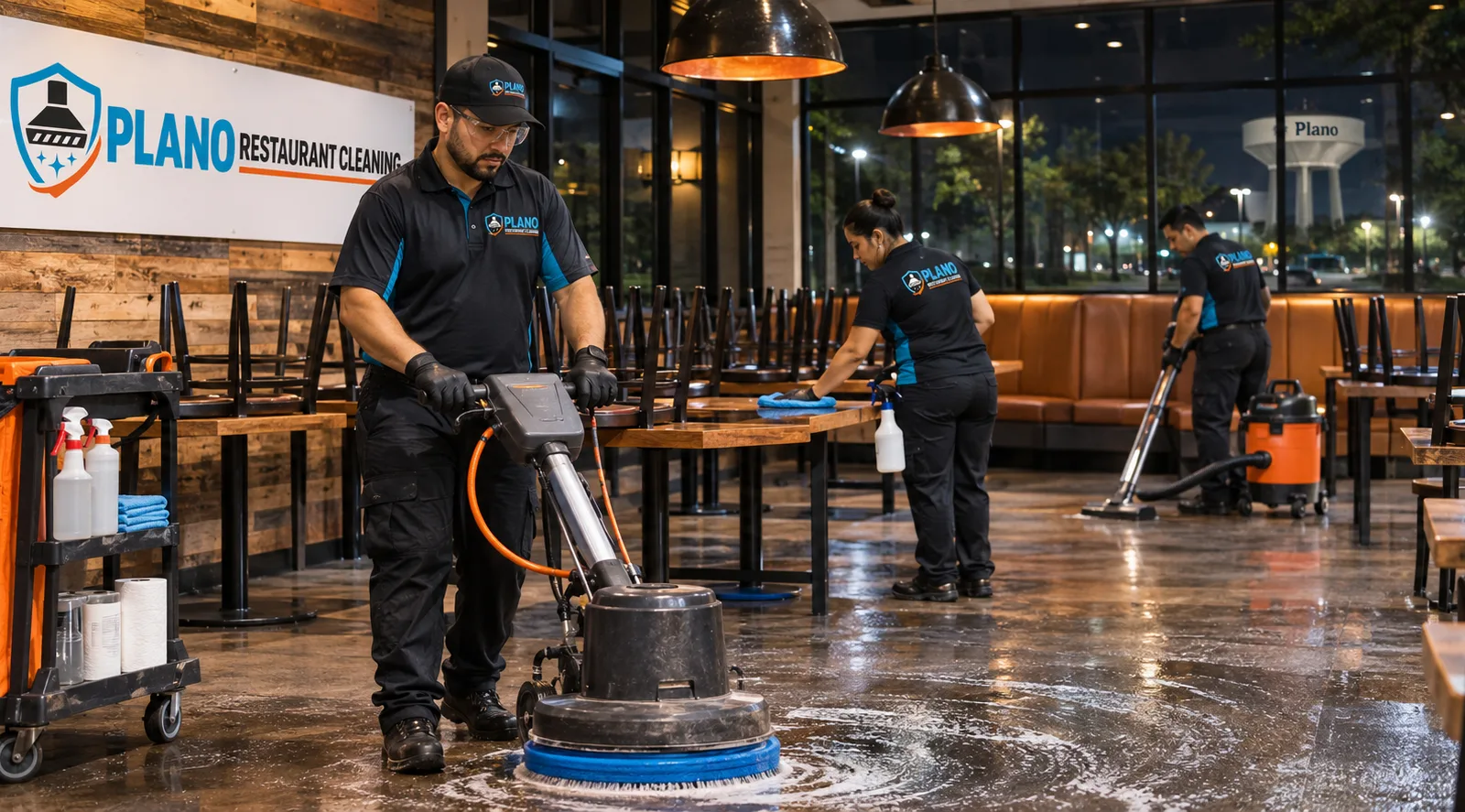
Put a dependable overnight crew on a recurring schedule so your kitchen, dining room, and restrooms are clean and ready before the next shift arrives.
Restaurant Night Cleaning begins after guests leave and works around closing duties, food storage, opening times, and approved access procedures. Plano Restaurant Cleaning provides recurring janitorial work for dining rooms, commercial kitchens, restrooms, entry areas, and staff spaces. The goal is a repeatable result each morning, supported by a written scope and a schedule that fits the operation.
Our restaurant specialists serving Plano, TX plan the work around the restaurant's hours rather than asking managers to adapt to a daytime janitorial route. That matters for restaurants near Downtown Plano's evening dining activity and for locations near Legacy West or The Shops at Legacy, where closing times and customer traffic may vary by day. Access instructions, alarm procedures, locked storage, and the manager's priority list are settled before recurring service begins.
The cleaning plan distinguishes janitorial cleaning from food-contact sanitation. Floors, fixtures, waste areas, restroom surfaces, and general kitchen exteriors can be assigned to the overnight crew. Restaurant staff should continue following the establishment's food-safety procedures for food-contact equipment and preparation surfaces. Clear responsibility prevents missed tasks and keeps chemicals away from exposed food, utensils, and single-use items.
A useful scope names the rooms, surfaces, methods, and frequency. In the dining room, nightly work may include vacuuming or damp mopping floors, wiping tables and chair touchpoints, cleaning glass doors, removing waste, and resetting the room according to management instructions. Entry mats and hard-floor edges need attention because grit is readily tracked indoors during dry North Texas weather, while rain can leave entrances wet and marked.
Back-of-house work may include sweeping and degreasing approved floor areas, spot cleaning walls, wiping equipment exteriors, cleaning sinks that are assigned to the janitorial crew, and emptying waste receptacles. Grease-cutting chemicals need the correct dwell time and dilution. They should also be compatible with quarry tile, grout, resilient flooring, stainless steel, and other surfaces in the facility.
Deep hood, duct, and exhaust-system cleaning is a specialized fire-safety service and should not be treated as ordinary nightly janitorial work. Likewise, grease-trap pumping, pest control, and equipment repair require separate qualified providers. Plano Restaurant Cleaning defines those boundaries in the scope so managers know what the nightly crew will complete.
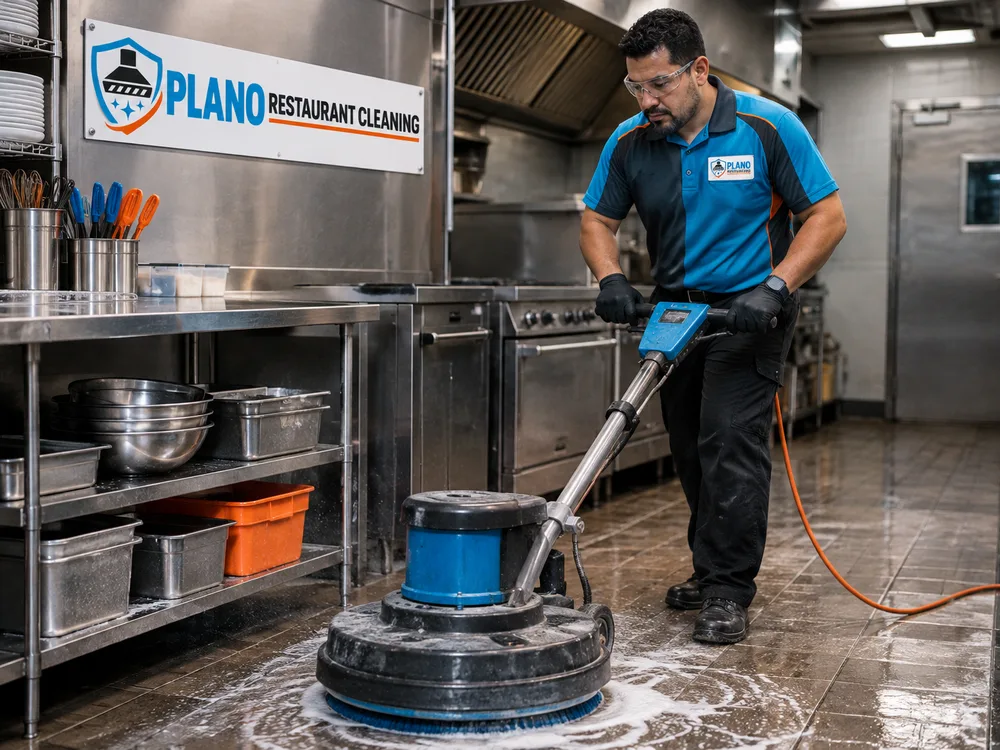
Floors, tables, chair touchpoints, ledges, glass doors, waiting areas, and waste receptacles are cleaned after customer service ends. The scope can account for carpet, tile, sealed concrete, or resilient flooring.
Assigned floors, washable wall areas, sinks, mats, waste containers, and equipment exteriors receive the specified treatment. Chemicals are selected and used according to their labels and the surface involved.
Toilets, urinals, sinks, partitions, mirrors, dispensers, touchpoints, and floors are cleaned and disinfected. Supplies can be restocked when products and minimum inventory levels are included in the agreement.
Entry glass, door handles, mats, visible floor edges, and final waste removal can be completed before the building is secured. Site-specific closing instructions remain part of the crew's checklist.
A walkthrough identifies floor materials, restroom fixtures, kitchen zones, waste handling points, storage restrictions, access conditions, and the time available between closing and opening.
Daily tasks are separated from weekly or periodic work. The written plan can assign nightly floor care and restroom service while scheduling detail work, such as baseboards or high dusting, less frequently.
Management provides approved entry procedures, alarm instructions, restricted areas, chemical-storage expectations, and an emergency contact process. The crew receives the location-specific checklist before the first shift.
The crew follows the agreed task order and records issues that require management attention. Early reviews help correct timing, clarify responsibilities, and update the checklist when operations change.
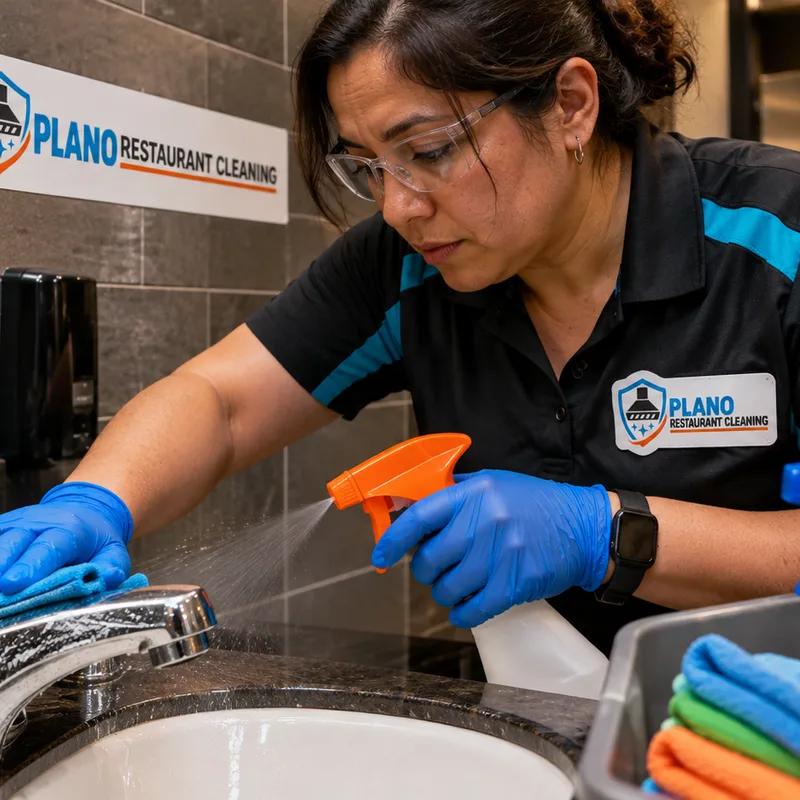
Restrooms often shape a guest's opinion of the entire restaurant, yet quick checks during service cannot replace a full closeout. Overnight restroom cleaning starts with soil and waste removal, then moves through fixtures, partitions, dispensers, mirrors, touchpoints, and floors. Disinfectants must remain visibly wet for the label's stated contact time. Spraying and immediately wiping may fail to provide that time.
A detailed checklist can cover toilets and urinals, flush handles, faucet handles, sinks, door hardware, baby-changing stations when present, and the areas around fixture bases. Cleaning tools should be color-coded or otherwise kept separate from those used in dining and kitchen areas. Floors are completed after higher surfaces so loosened soil is not dropped onto a finished floor.
Restocking can also be built into Restaurant Restroom Cleaning. Management identifies the approved soap, tissue, towels, liners, and inventory location, while the crew notes low stock according to the agreed process. Plumbing leaks, loose dispensers, damaged partitions, and persistent odors should be reported rather than concealed with fragrance.
A single schedule does not fit every restaurant. Downtown Plano locations may need the crew to work around evening dining traffic and shared commercial access. Restaurants near Legacy West and The Shops at Legacy may have later guest departures, larger dining rooms, or property-management rules that affect entry and waste movement. Locations along major corridors such as Preston Road may see heavy vehicle traffic that increases tracked-in grit at entrances. These conditions are confirmed during the walkthrough rather than assumed.
North Texas weather also changes the nightly workload. Wind and dry conditions can increase dust and grit near doors and patios. Thunderstorms can leave wet mats, footprints, and soil at the entrance. A recurring plan can define what the crew does during weather-related conditions, including mat handling, wet-floor precautions, and additional entry cleaning.
Daily Restaurant Cleaning handles the tasks that cannot wait, while weekly and periodic work addresses gradual buildup. That may include detail cleaning around floor edges, chair legs, grout lines, vents, or other accessible surfaces included in the agreement. Separating frequencies keeps the nightly shift realistic and makes inspection easier.
The crew should work from tasks written for the actual restaurant, including its materials, restricted zones, closing routine, and opening deadline.
Products need labels, correct dilution, suitable storage, and surface compatibility. Restroom tools should remain segregated from tools assigned to dining and kitchen spaces.
Managers need a defined way to report misses, request reasonable scope updates, and flag maintenance concerns. The provider should document corrective action and communicate recurring obstacles.
Key, code, alarm, and lockup procedures should be limited to authorized personnel and documented before service. Changes to access instructions need prompt confirmation.
Get a written overnight scope that identifies nightly tasks, periodic work, access procedures, and the hours available before your opening crew arrives.
Call for a Free QuotePricing is usually based on labor time and service frequency rather than one standard rate. Square footage, kitchen grease levels, restroom count, floor materials, closing time, access, waste handling, and the number of weekly visits all affect the proposal. A Plano restaurant with a short overnight window may need a larger crew than a similar space with more time available. The exact recurring price is confirmed after a walkthrough and written scope.
Yes, service can be planned for the interval between final closing duties and the next opening shift, subject to crew availability. Restaurants near Plano's evening dining destinations may need staggered start times because guests, delivery drivers, or closing staff remain on the premises. The schedule should state when cleaners may enter, which manager releases the space, and when all work must be finished.
Restocking can be included when the approved products, storage location, and minimum stock expectations are documented. The crew can replace tissue, towels, soap, liners, and related consumables supplied under the agreement. During the initial Plano walkthrough, management should identify locked storage and specify how low inventory, damaged dispensers, or plumbing problems are reported.
Yes, recurring service can be scheduled nightly when the restaurant's traffic and operating hours support that frequency. Some tasks belong on every visit, including restroom closeout and floor care, while detail work may rotate through a weekly or periodic schedule. The walkthrough determines how much can be completed within the overnight access window.
Only assigned surfaces and equipment should be cleaned, and food-contact sanitation responsibilities must be stated clearly. Restaurant staff commonly retain responsibility for preparation surfaces, utensils, and internal cooking-equipment procedures under the establishment's food-safety plan. The janitorial scope can cover approved exteriors, floors, washable walls, and other listed areas after food is protected or removed.
The start date depends on the walkthrough, final scope, service schedule, access setup, and crew availability. A restaurant with straightforward entry and a stable closing time can be easier to schedule than one requiring property approval or a narrow work window. Plano Restaurant Cleaning confirms timing after those operating details are reviewed.
Managers should compare the actual task list, visit frequency, inspection process, access controls, chemical practices, exclusions, and response procedure. A low proposal may omit periodic floor work, supply restocking, kitchen support tasks, or sufficient labor for the available window. Ask each provider to price the same written scope so the comparison reflects equivalent work.
Tell Plano Restaurant Cleaning about your operating hours, floor types, restroom count, kitchen priorities, and current trouble spots. A walkthrough can turn those details into a clear recurring scope for your restaurant.