Pipes, Conduit, and Beams
Exposed utility lines and structural members collect dust along their upper faces. Extension tools allow residue to be captured without dragging it across lower surfaces.
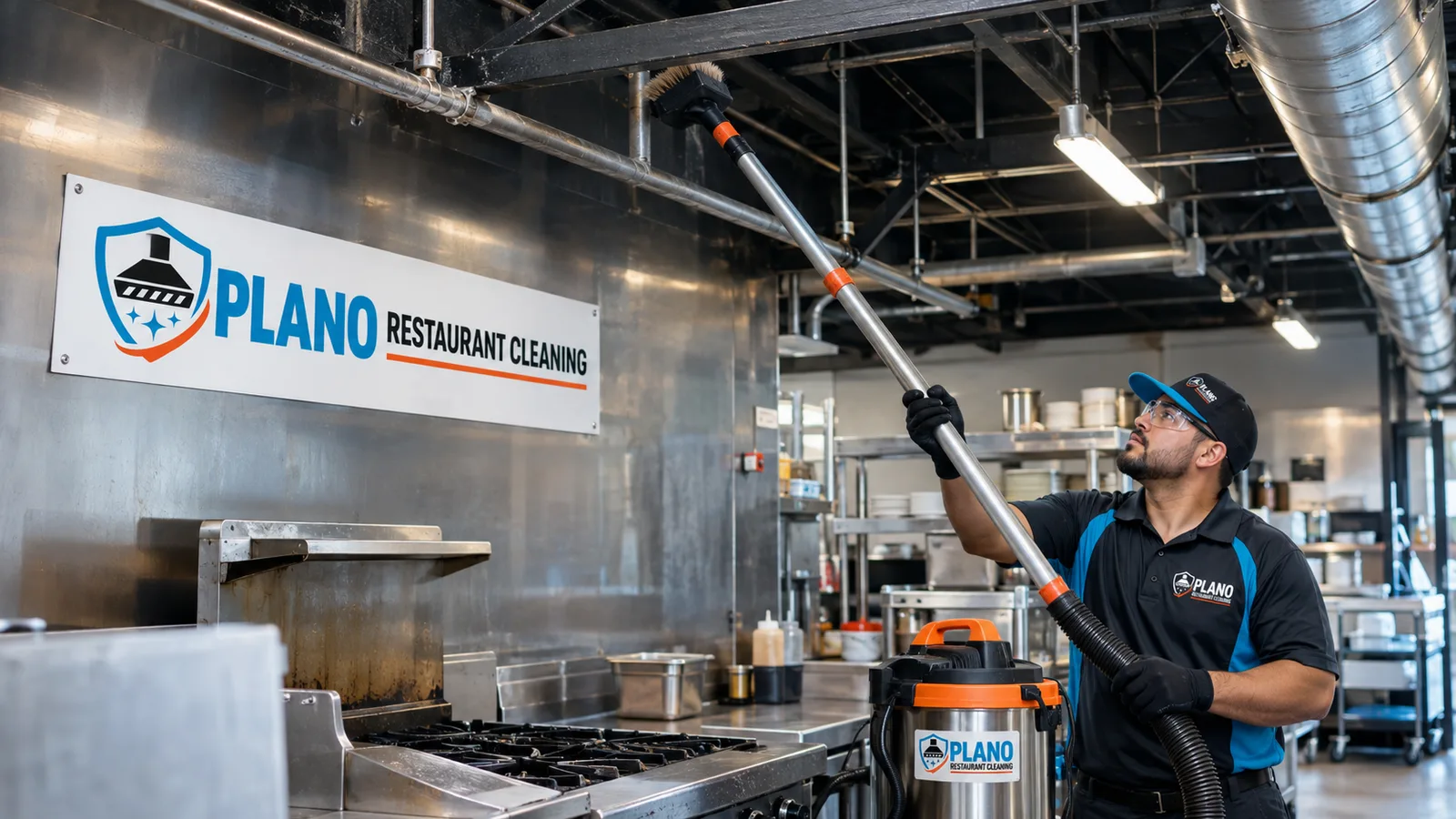
Remove grease-laden dust and debris from hard-to-reach overhead surfaces with a cleaning plan built around your kitchen, equipment, and operating schedule.
Restaurant High Dusting Allen addresses buildup on surfaces that routine wiping and mopping cannot reach. Common targets include ceiling vents, exposed duct exteriors, pipes, conduit, light housings, upper wall ledges, ceiling fans, beams, and the tops of coolers or other tall equipment. In a working kitchen, airborne dust can mix with aerosolized grease and form a tacky film that traps more debris.
Plano Restaurant Cleaning plans the work around the actual room rather than treating every kitchen alike. Before cleaning starts, a professional restaurant company in Plano assesses ceiling height, equipment placement, food-contact areas, access restrictions, and the safest way to capture debris. The business address on J Avenue provides a practical base for serving nearby Allen restaurants, including independent kitchens and commercial dining operations near major corridors such as US 75 and West McDermott Drive.
High dusting is separate from cleaning inside a kitchen exhaust duct or servicing fire-suppression equipment. If an inspection reveals residue within a hood or exhaust system, that work should be assigned to the properly qualified provider. This scope stays focused on accessible overhead room surfaces and exterior components.
Dry dust rarely stays dry in a commercial kitchen. Cooking vapors can carry fine grease particles beyond the immediate cook line, where they settle on horizontal edges and textured surfaces. Once the film becomes sticky, feather dusters and casual brushing can spread particles instead of collecting them.
A controlled high-dusting setup uses commercial vacuums, extension tools, microfiber materials, and appropriate degreasers based on the surface and soil. HEPA-filtered vacuuming may be used where fine particulate capture is needed. Technicians protect prep tables and equipment, work from the highest surfaces downward, and contain loosened residue before lower-level cleaning begins.
Allen's hot summers can increase demand on air-conditioning systems and ceiling vents. That does not make HVAC equipment the source of every dust problem, but it does make vent faces, returns, and nearby ledges sensible inspection points. Cleaning visible exterior surfaces does not replace duct maintenance or mechanical service.
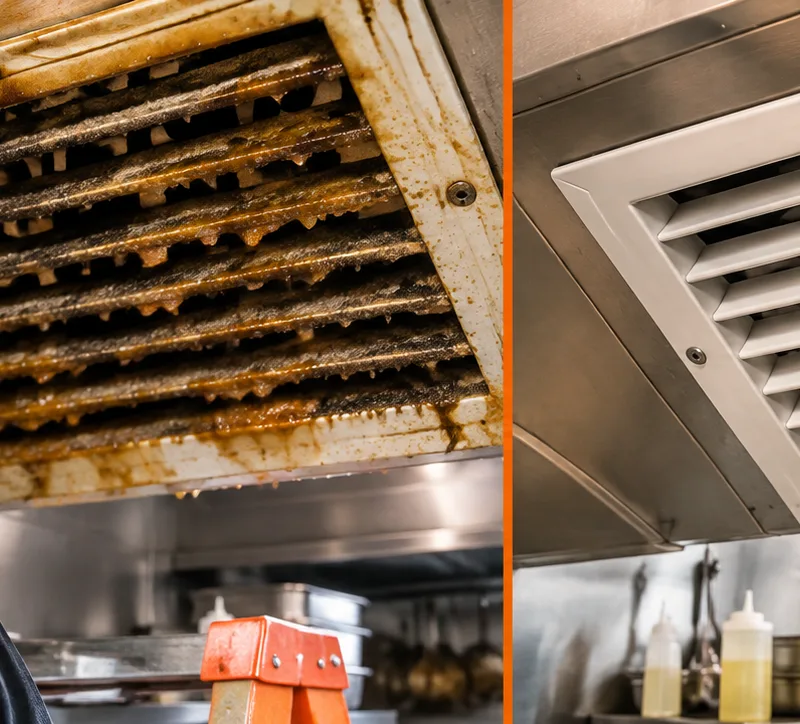
Exposed utility lines and structural members collect dust along their upper faces. Extension tools allow residue to be captured without dragging it across lower surfaces.
Visible vent covers, grilles, and exterior duct surfaces can be vacuumed and wiped when they are safely accessible. Internal HVAC and exhaust-duct cleaning remain separate scopes.
Dust and grease are removed from accessible fixture exteriors using methods suited to the material. Electrical components are not opened or serviced as part of ordinary high dusting.
Wall caps, shelving tops, cooler tops, and similar horizontal surfaces are common collection points that may be missed during nightly cleaning.
Accessible fan exteriors, suspended décor, and architectural elements can be added after their stability, finish, and proximity to food areas are checked.
When included in the written scope, overhead cleaning can extend beyond the cook line to dining rooms, server stations, beverage areas, and storage rooms.
The first review identifies target surfaces, ceiling height, residue type, fragile fixtures, access limits, and areas that require extra containment. This is also when out-of-scope mechanical or exhaust components are flagged.
The written plan states which rooms and overhead surfaces are included. Work may be arranged before opening, after closing, or during another approved period so cleaners are not operating over active food preparation.
Food and exposed utensils must be removed or secured by the restaurant. The crew then covers designated equipment and work surfaces, positions access equipment, and sets up particle-control tools.
Loose particles are vacuumed first. Grease-bound residue is then wiped with a surface-compatible product where appropriate. Cleaning proceeds downward so falling debris does not soil completed areas.
Protective coverings and captured debris are removed, accessible target areas are checked, and any heavy staining, damaged fixture, or surface that could not be safely reached is documented for the restaurant contact.
A freestanding restaurant near Allen's US 75 retail corridor may have a larger cook line, taller ceilings, and more extensive exposed utilities than a compact tenant kitchen. A restaurant near Watters Creek may combine dining-room architectural elements with a separate back-of-house ceiling system. Downtown Allen's smaller commercial spaces can present tighter equipment clearances and limited room for ladders or lifts. These differences affect access, containment, crew setup, and the time needed to complete the work.
Before scheduling, identify whether the kitchen has an open ceiling, suspended tiles, acoustic materials, or washable wall and ceiling panels. Porous finishes, loose tiles, and aging insulation cannot always tolerate wet wiping. The cleaning method should match the material rather than forcing one chemical or tool across every surface.
Access matters as much as square footage. Fixed equipment, narrow aisles, floor drains, gas lines, and hanging racks can limit safe positioning. A clear walk-through helps determine whether extension poles, step platforms, or other access equipment are appropriate.
High dusting works best when it is coordinated with lower-level kitchen cleaning. Overhead surfaces are handled first because disturbed particles may settle on protected equipment, floors, and nearby horizontal surfaces. Once the elevated work is complete, the room can receive its planned detail cleaning without re-soiling finished areas.
The right frequency depends on cooking volume, menu, ventilation performance, ceiling texture, and how quickly visible residue returns. Frying, grilling, and other grease-producing processes may create different conditions than a bakery, café, or cold-preparation operation. An initial visit establishes the condition of the space. Later scheduling can be based on documented buildup rather than an arbitrary interval.
High dusting also supports clearer routine inspections by removing old residue that can hide fresh leaks, damaged ceiling materials, pest evidence, or deteriorated finishes. Cleaning does not repair those conditions, but it can make them easier for restaurant management and qualified trades to identify.
Share your kitchen layout, ceiling conditions, preferred work window, and problem areas to receive a clear high-dusting scope before service is scheduled.
Call for a Free QuoteRestaurant high dusting is generally priced after the ceiling height, square footage, residue level, and access conditions are reviewed. A compact kitchen with reachable ledges takes less setup than a large US 75 corridor restaurant with tall open ceilings and extensive exposed utilities. Grease-bound soil, lift requirements, overnight scheduling, and extensive equipment protection can add labor. A walk-through provides the basis for an exact written price.
Yes, high dusting can often be scheduled outside operating hours when access and staffing permit. The restaurant needs to stop food preparation in the work zone and secure exposed food, utensils, and movable supplies before cleaning. The approved work window should leave enough time for protection, overhead cleaning, lower-surface cleanup, and the final review before kitchen activity resumes.
No, ordinary high dusting does not include cleaning inside grease exhaust ducts, servicing fans, or working on fire-suppression systems. It may include accessible exterior surfaces around the hood or ductwork if they are listed in the scope. Internal exhaust-system work should be handled under a separate qualified service based on the system and applicable requirements.
The interval should be based on visible return of dust and grease, not a single schedule for every restaurant. Cooking methods, hours of operation, ventilation, ceiling texture, and traffic all affect buildup. Plano Restaurant Cleaning can document the condition during an initial visit and recommend a practical review interval after seeing how quickly residue returns.
Only equipment identified during the walk-through should be moved, and fixed or connected appliances should remain in place unless a qualified person handles them. Staff should remove exposed food and small wares, clear agreed access routes, and identify anything fragile. In tighter Downtown Allen tenant spaces, even modest aisle clearance can materially affect safe access.
Porous or fragile ceiling materials require inspection before cleaning because aggressive wiping or excess moisture can stain or damage them. Light vacuuming may be suitable for some intact materials, while greasy, sagging, or damaged tiles may need replacement rather than cleaning. The written scope should state which materials can be treated and which should be referred for repair.
The duration depends on room size, ceiling height, access, and the amount of grease-bound residue. A small prep area may fit within one closure period, while a larger kitchen and dining area may require a longer window or phased work. An on-site review is the reliable way to match the work to an Allen restaurant's operating schedule.
Tell Plano Restaurant Cleaning which rooms, fixtures, and elevated surfaces need attention. We will review access and operating constraints, then outline a practical scope for your Allen restaurant.