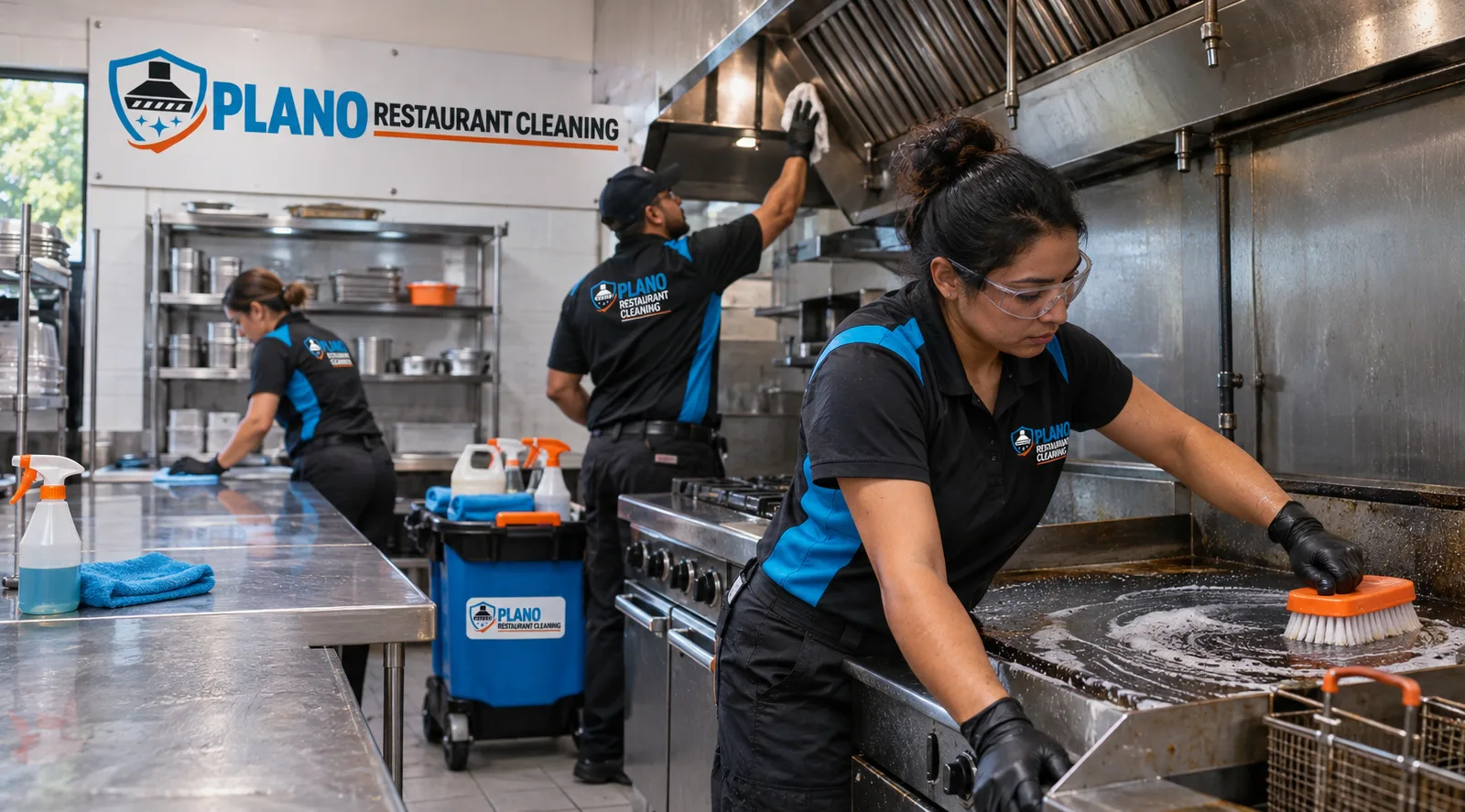
A trained cleaning crew performing detailed degreasing in a commercial restaurant kitchen with stainless steel prep tables and cooking equipment
Kitchen deep cleaning · Plano, Texas

Kitchen Deep Cleaning in Plano

Detailed care for restaurant kitchens, walk-in coolers, overhead surfaces, equipment exteriors, and other areas that routine nightly work can miss.

✓Cooking-line detail work
✓Walk-in cooler cleaning
✓Accessible high dusting
✓Operational scheduling
A scope matched to your operation

Detailed Cleaning Built Around Your Kitchen

Kitchen Deep Cleaning addresses the grease, food residue, dust, and buildup that accumulate beyond the reach of routine closing work. Plano Restaurant Cleaning develops the scope around your equipment, floor plan, operating schedule, and current conditions. Instead of treating every kitchen alike, we identify the surfaces that need attention and establish what must be moved, protected, shut down, or left untouched.

Our work can cover cooking-line surrounds, equipment exteriors, walls, baseboards, floor edges, shelving, accessible overhead surfaces, walk-in units, and hard-to-reach spaces. We are Plano's restaurant specialists who plan the work around the practical demands of an active food-service operation. The goal is a clear scope, orderly execution, and a kitchen that is ready for your team to inspect before normal use resumes.

Plano restaurants operate in a North Texas climate where warm conditions can increase the demands placed on refrigeration and ventilation equipment. Dust can also settle on pipes, ledges, ceiling vents, and other high surfaces. A detailed cleaning plan should account for those conditions without applying chemicals or water where equipment manufacturers prohibit them.
Request a Callback
Detailed service scope

What Restaurant Deep Cleaning Services Can Cover

Request a Callback

Cooking-Line Detail Work

Degreasing can address accessible equipment exteriors, sides, backsplashes, walls, casters, floor edges, and spaces beneath movable units. Heavy deposits may require dwell time and repeated passes rather than harsher methods.

Walk-In Cooler Cleaning

Walk In Cooler Cleaning can include floors, walls, shelving, door surfaces, gaskets, and accessible corners after food is removed or protected. Product handling, temperature control, and manufacturer restrictions must be settled before work starts.

High Dusting in Plano

High Dusting Plano service targets accessible pipes, ledges, ceiling vents, light surrounds, and structural surfaces where settled dust collects. Crews use appropriate access equipment and control falling debris before lower surfaces receive final cleaning.

Floors, Edges, and Drains

Detailed floor work focuses on grout lines, corners, wall junctions, beneath movable equipment, and the accessible areas around drains. Drain interiors, plumbing repairs, and grease-trap pumping require separate scopes.

Prep and Storage Areas

Shelving, racks, worktables, splash areas, and washable wall surfaces can be included. Food-contact surfaces receive products and procedures suited to their intended use, followed by the required rinse or sanitizing step.

Front-of-House Support Areas

When included in the written scope, cleaning can extend to service stations, beverage surrounds, pass-through areas, and other spaces directly affected by kitchen operations.

Controlled methods for commercial kitchens

Commercial Kitchen Deep Cleaning in Plano Requires the Right Method

Professional restaurant deep cleaning is a controlled process, not indiscriminate pressure washing. The crew first identifies stainless steel, painted surfaces, tile, grout, rubber gaskets, electrical components, and food-contact areas. Chemicals are selected for the soil and substrate, mixed according to their labels, and given enough dwell time to loosen residue. Mechanical agitation and controlled rinsing then remove material without flooding sensitive equipment.

Food-contact surfaces require special care. Cleaning removes visible soil, while sanitizing is a separate step performed after cleaning with an appropriate product and label-directed contact time. A surface cannot be effectively sanitized while grease or food residue remains on it.

Restaurant deep cleaners should also distinguish cleaning from specialized maintenance. Hood and exhaust-system cleaning, fire-suppression work, pest treatment, refrigeration repair, grease-trap pumping, and drain service may require qualified providers. Visible hood exteriors may fit a detailed cleaning scope, but internal exhaust-system work should be identified separately before scheduling.

Request a Callback
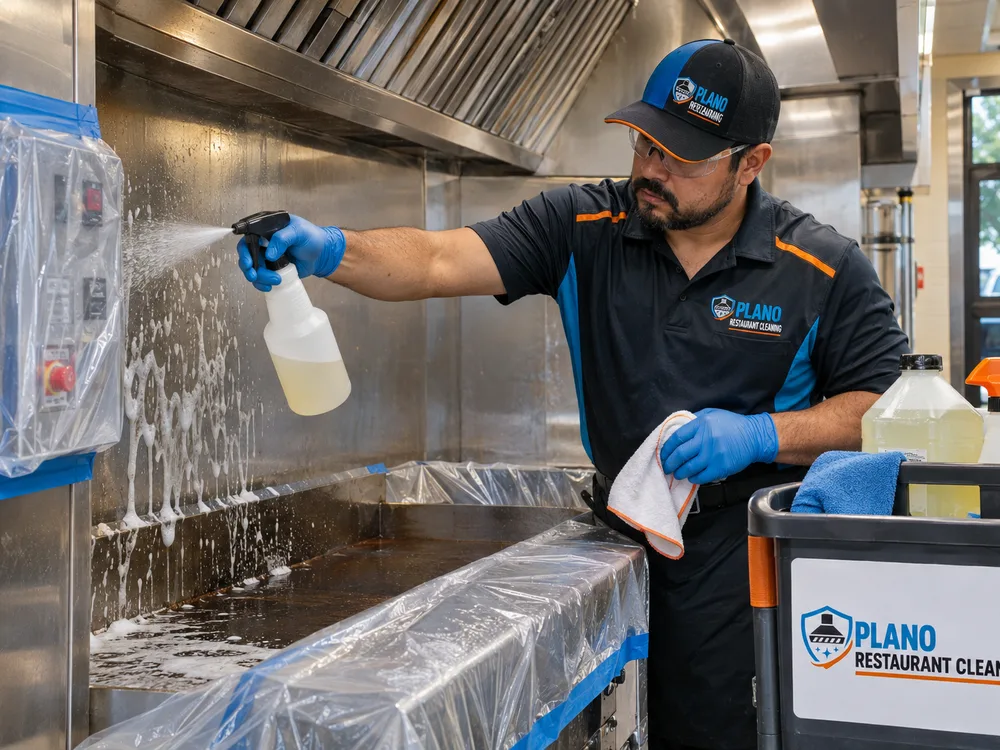
A commercial kitchen cleaner applying degreaser to stainless steel equipment while controls and food-contact areas are protected
Surface identification and controlled chemical use help protect commercial kitchen equipment.
A defined workflow

How a Restaurant Detailed Cleaning Is Planned

  1. Step01

    Walk Through the Kitchen

    We review the cooking line, refrigeration areas, storage, prep surfaces, floors, overhead structures, access points, and operating constraints. The walkthrough identifies heavy buildup and surfaces that need special handling.

  2. Step02

    Define the Written Scope

    The plan lists included areas, exclusions, access needs, responsibilities for food and smallwares, and any equipment that may be moved. It also records water, power, drainage, and shutdown requirements.

  3. Step03

    Prepare and Protect

    Food, utensils, packaging, and portable items are removed or protected as agreed. Sensitive controls and electrical components are isolated from spray, while floors and access routes are prepared for safe work.

  4. Step04

    Clean in a Set Order

    Crews generally address high surfaces before lower ones so falling debris is captured during later cleaning. Degreasing, agitation, detail work, controlled rinsing, and floor cleaning follow the requirements of each area.

  5. Step05

    Review Before Reopening

    The completed scope is checked with the customer. Surfaces are left to dry as needed, protective materials are removed, and the restaurant team handles any required equipment startup or food replacement under its own operating procedures.

Request a Callback
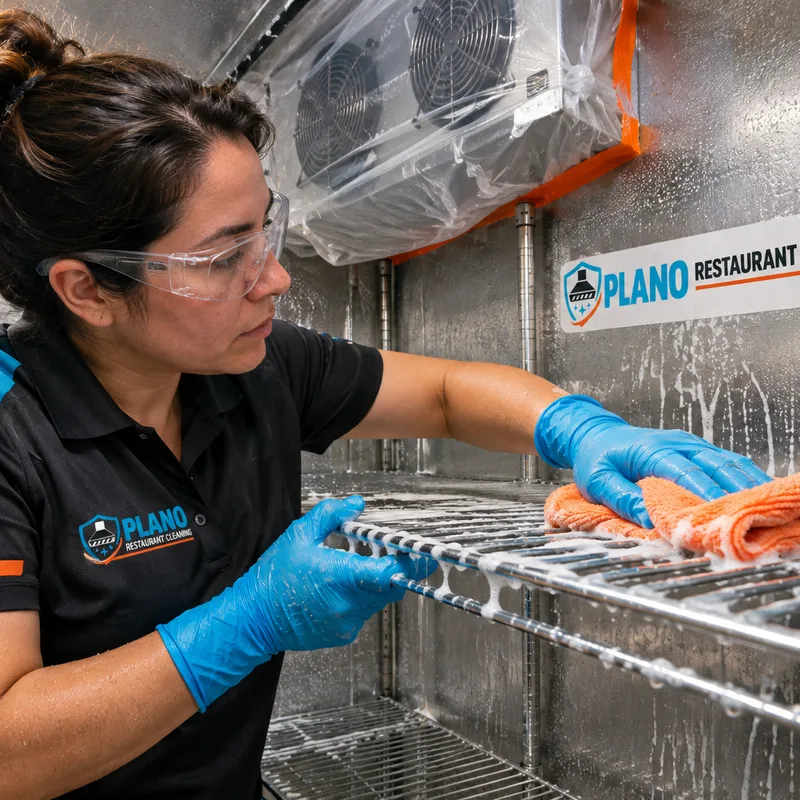
A cleaner wiping removable shelving and interior walls inside an emptied restaurant walk-in cooler with the evaporator protected
Walk-in work is planned around food removal, temperature control, and sensitive refrigeration components.
Controlled care for cold storage

Walk-In Cooler Cleaning Without Disrupting Cold Storage

A walk-in requires a plan for product, temperature, moisture, and equipment protection. Before cleaning starts, the restaurant decides whether food will be relocated, consolidated in protected containers, or handled in stages. Cleaning around exposed food is avoided, and chemicals should never be sprayed toward evaporator fans, controls, sensors, or unprotected products.

The service may address washable walls, floors, shelving, door faces, handles, thresholds, and gaskets. Gaskets need mild methods because aggressive scrubbing or incompatible chemicals can damage them. Standing water should be controlled, especially around thresholds and floor transitions where slip hazards can develop.

Cleaning does not correct mechanical trouble. Ice accumulation, damaged seals, unusual temperatures, blocked condensate lines, or fan problems should be referred to a refrigeration professional. Plano Restaurant Cleaning can document visible concerns found during the work so the restaurant can decide on the proper next step.

Request a Callback
Service windows that fit your operation

Scheduling Around Plano Restaurant Operations

The best service window depends on the kitchen's hours, cooling time, equipment access, and reopening schedule. A small prep kitchen with light buildup may need a shorter window than a high-volume cooking line with fixed equipment and heavy grease. Deep cleaning can be scheduled as a focused one-time project or placed on a recurring plan based on the rate of buildup.

Plano has several distinct restaurant settings, and access affects the plan. Downtown Plano's historic commercial blocks can involve tighter loading and waste-handling arrangements. Legacy West and The Shops at Legacy include restaurants in mixed-use developments where building access and service-hour rules may shape arrival times. Restaurants near major corridors such as US 75 may have long operating days, so shutdown and reopening responsibilities should be agreed upon early.

Seasonal demand also matters. North Texas heat places extra attention on keeping walk-in work controlled and limiting how long doors remain open. The cleaning schedule should leave enough time for surfaces to dry, equipment to be checked by restaurant staff, and food or smallwares to be returned safely.

Request a Callback

Get a written scope that identifies the surfaces, access requirements, exclusions, and service window before cleaning begins.

Call for a Free Quote
Answers before service begins

Questions About Restaurant Deep Cleaning in Plano

How much does Kitchen Deep Cleaning cost in Plano?

Pricing depends on kitchen size, grease level, equipment access, included areas, and the length of the service window. A compact prep kitchen costs less to clean than a full cooking line with heavy deposits, overhead dust, and walk-in units. A walkthrough at the restaurant is the best way to confirm a written scope and project price.

How long does a professional restaurant deep cleaning take?

A focused cleaning may fit within one closed service window, while a large or heavily soiled kitchen may require a longer shutdown or work completed in phases. Equipment cooling, food removal, restricted access, dwell time, and drying all affect the schedule. Plano restaurants with building access rules should provide those requirements during planning.

Can cleaning be completed overnight?

Overnight work may be available when the scope, access, utilities, and reopening time allow it. The kitchen must have enough time to cool before work and to dry before restaurant staff restart equipment or replace supplies. Any mixed-use property rules, loading restrictions, or security procedures should be confirmed in advance.

Do we need to empty the walk-in cooler before cleaning?

Food must be removed, securely protected, or managed through an agreed staged plan before Walk In Cooler Cleaning begins. The right approach depends on the scope and available cold storage. The restaurant remains responsible for product handling and temperature-control decisions, while the cleaning plan identifies which shelves and surfaces must be accessible.

Will restaurant deep cleaners move cooking equipment?

Movable equipment may be repositioned when the scope allows and the unit can be handled safely. Gas-connected, hard-wired, plumbed, bolted, or unusually heavy equipment usually requires restaurant approval and may need a qualified trade professional. The walkthrough identifies these limits before work starts.

Is high dusting performed over food-preparation areas?

High dusting is completed only after exposed food, utensils, and preparation surfaces are removed or protected. Debris control is established first, and lower surfaces receive final cleaning afterward. Accessible pipes, ledges, vents, and light surrounds can be included, but electrical and inaccessible structures may be excluded.

Does kitchen deep cleaning include hood exhaust cleaning?

Internal hood, duct, and exhaust-fan cleaning should be treated as a separate specialized scope. Kitchen deep cleaning may include accessible hood exteriors and nearby washable surfaces when listed in the proposal. Fire-suppression components and internal exhaust systems should be handled only under the appropriate service requirements.

How often should a restaurant schedule detailed cleaning?

The interval should be based on cooking volume, menu, grease production, dust accumulation, and how quickly routine cleaning stops controlling buildup. Frying and high-heat cooking may create different needs than a cold-prep operation. After the first service, the observed condition can guide a practical recurring schedule.

What should we prepare before the crew arrives?

Confirm access, operating hours, water and power availability, food removal, equipment shutdown responsibilities, and the location of items that must remain untouched. Smallwares and personal items should be cleared from included areas. Restaurants in managed Plano developments should also arrange any required loading, security, or after-hours access.

Define your kitchen scope

Plan a Cleaner, More Manageable Kitchen Shutdown

Tell Plano Restaurant Cleaning about your equipment, operating hours, problem areas, and preferred service window. We will help define a practical scope for the work your kitchen needs.