Cooking-Line Degreasing
Degreasing for accessible surfaces on ranges, ovens, fryers, griddles, salamanders, and surrounding stainless steel. Equipment is handled according to its construction, condition, and manufacturer guidance.
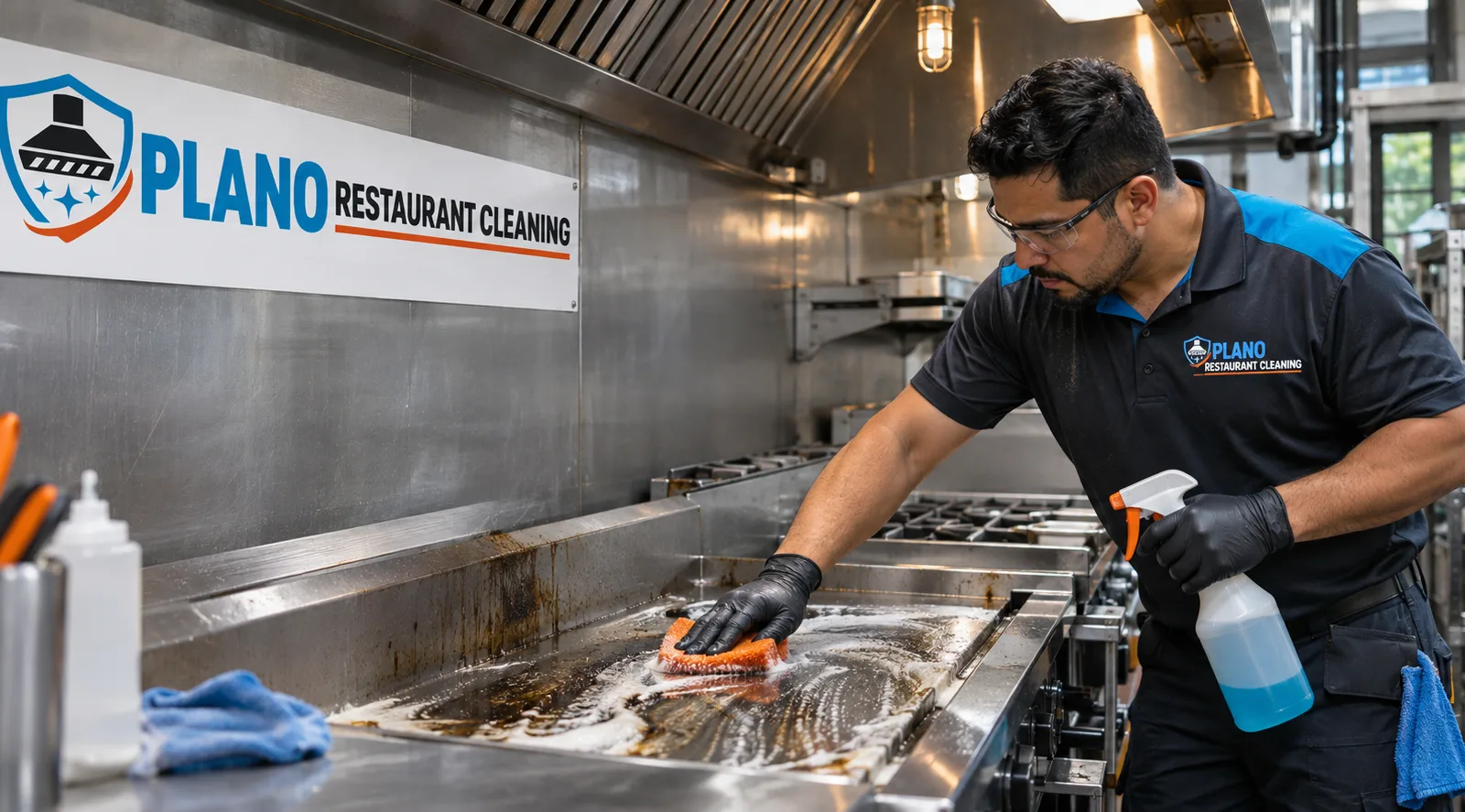
Detailed cleaning for restaurant cooking lines, equipment, floors, walls, and hard-to-reach areas, scheduled around your operating hours.
Kitchen Cleaning Services should address the grease, carbon, food residue, and soil that routine closing work cannot fully remove. Plano Restaurant Cleaning develops a written scope around your equipment, surfaces, access limits, and operating schedule. That may mean a focused cooking-line service, periodic equipment detailing, or commercial kitchen deep cleaning across the back of house.
Our work as Plano's local restaurant service begins with a practical review of the kitchen and the areas that need attention. We identify movable and fixed equipment, discuss which appliances may be opened or repositioned, and confirm what your staff must shut down or cool before the crew arrives. The resulting plan can distinguish routine sanitation duties from periodic detail cleaning, so everyone knows what is included.
Plano restaurants near Downtown Plano often operate in compact commercial spaces where access and staging require careful planning. Kitchens serving the Shops at Legacy area may need work timed around evening and weekend demand. Along the US 75 corridor, scheduling may need to account for high-volume lunch operations. These operating patterns affect crew timing, equipment cooldown, and the order of work.
Degreasing for accessible surfaces on ranges, ovens, fryers, griddles, salamanders, and surrounding stainless steel. Equipment is handled according to its construction, condition, and manufacturer guidance.
Detail cleaning may cover removable racks, trays, knobs, guards, casters, exterior panels, and reachable areas beneath or behind approved movable units.
Service can address floor buildup, corners, wall junctions, equipment legs, and accessible floor drains. Cleaning methods are selected for the floor material and the type of soil present.
Degreasing may include washable wall panels, backsplashes, doors, shelving, and other non-food-contact surfaces within the agreed scope.
Approved prep tables, shelving, and reachable storage-area surfaces can be cleaned after food, utensils, and loose inventory have been removed or protected.
One-time, periodic, and recurring schedules can be built around service demands, equipment use, and the buildup found during each visit.
Daily cleaning is necessary, but it usually concentrates on immediate food-contact surfaces, visible spills, and floors. A professional deep clean targets accumulated soil around equipment feet and casters, beneath cooking lines, along wall-floor junctions, and on reachable sides, backs, and undersides of equipment.
The method depends on the surface. Alkaline degreasers can loosen fatty deposits on compatible materials, while dwell time gives the product time to work before agitation and removal. Stainless steel requires non-damaging tools and attention to the grain. Painted surfaces, aluminum components, electrical controls, seals, and labels may need gentler treatment or exclusion from wet cleaning.
Commercial kitchen cleaning is different from exhaust-system service. Hood plenums, fans, rooftop components, and ductwork require specialized access and procedures. If those components are outside the agreed scope, we state that clearly rather than treating visible hood surfaces as a complete exhaust cleaning.
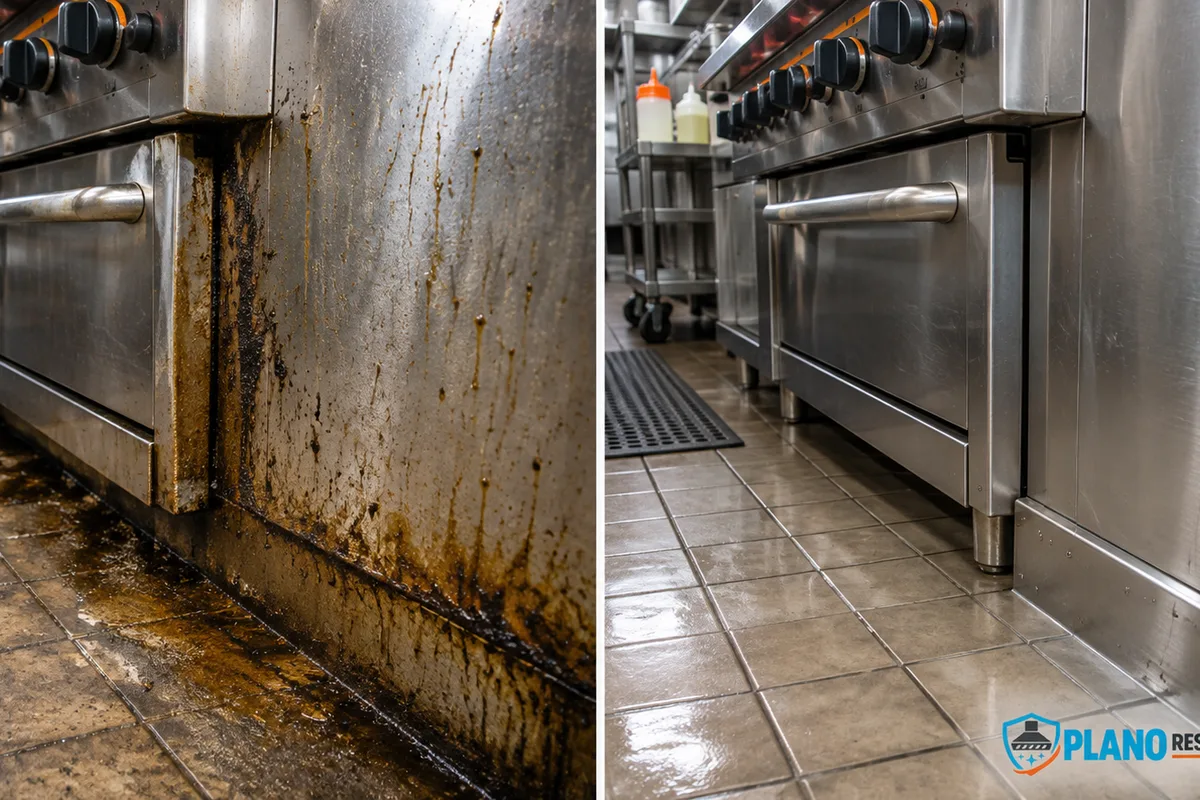
We discuss the cooking line, prep areas, equipment, floors, access conditions, and problem buildup. The scope identifies included surfaces and any exclusions before cleaning begins.
Hot equipment must cool before it can be cleaned safely. The restaurant removes or secures food and utensils, while the crew prepares the work area and confirms which equipment may be moved.
Cleaners apply surface-appropriate products, allow suitable dwell time, and agitate deposits with pads, brushes, or scrapers selected for the material. Soil and cleaning residue are then removed.
Accessible surfaces are wiped or rinsed as appropriate, equipment is returned to its agreed position, and the completed scope is reviewed. Restaurant staff handle startup and operational checks unless other arrangements are documented.
The next interval is based on cooking volume, grease load, menu, equipment arrangement, and how quickly buildup returns. High-use lines may need more frequent attention than lower-use storage areas.
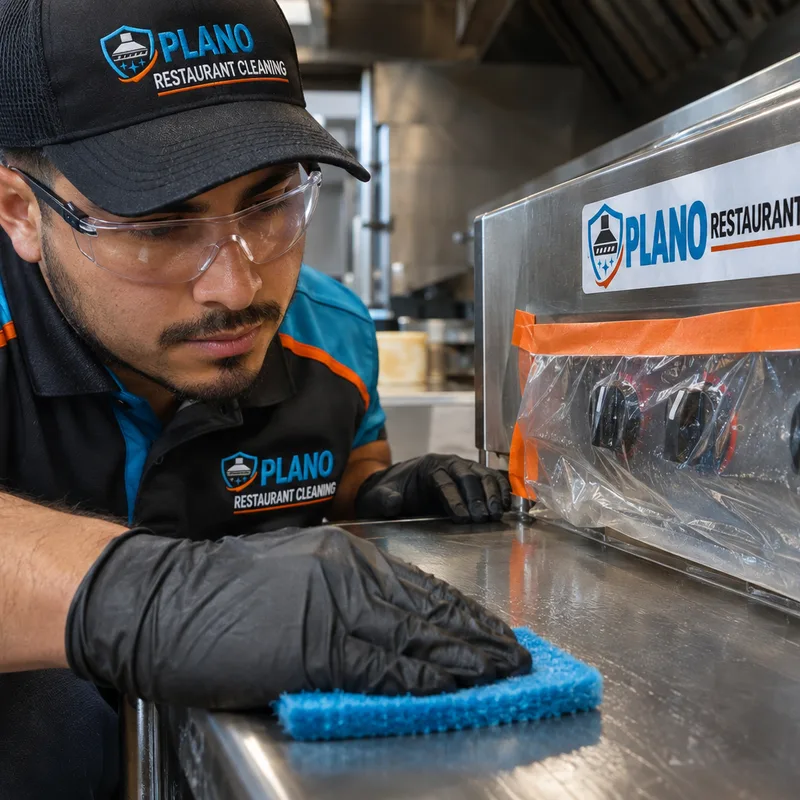
Commercial equipment has seams, guards, controls, gas or electrical connections, and surfaces that can be damaged by the wrong chemical or tool. Experienced restaurant kitchen cleaners plan around those limits. They also separate food-contact surfaces from non-food-contact areas and avoid spraying liquids into controls, motors, burners, or other sensitive components.
Plano restaurants operate under food-safety requirements enforced through the City of Plano's Environmental Health program. A cleaning company cannot guarantee inspection outcomes, because compliance also depends on food handling, temperatures, pest control, equipment condition, and staff practices. Professional kitchen cleaning can support a restaurant's sanitation program by removing accessible grease and residue within a documented scope.
Plano's hot summers can add to the difficulty of overnight back-of-house work, particularly after cooking equipment has run through a busy shift. Adequate cooldown time, ventilation, and safe chemical handling should be part of the schedule rather than improvised after arrival.
Commercial kitchen cleaning in Plano typically costs about $500 to $2,500 for a focused or moderately sized deep clean, while extensive kitchens or heavy buildup may cost more. A small cooking-line service is generally at the lower end; multi-area work with numerous appliances is higher.
Final price depends on kitchen size, grease level, equipment count, movable-unit access, cleaning frequency, floor condition, and overnight scheduling. Exhaust ductwork, pest treatment, repairs, and appliance disassembly may require separate specialists. Exact cost is confirmed after a kitchen review and written scope.
A clear scope makes it easier to compare proposals and plan downtime. Tell us which equipment and kitchen areas need attention, and we will outline a practical cleaning plan.
Call for a Free QuoteA focused cooking-line clean may take several hours, while a full back-of-house deep clean may require an overnight shift or longer. Timing depends on equipment count, grease buildup, access, and how much preparation is completed before arrival. Plano restaurants with compact kitchens may also need staged cleaning because there is limited space to move equipment.
Yes, after-hours and overnight scheduling may be arranged based on crew availability and the size of the job. The schedule must include enough time for fryers, ovens, griddles, and ranges to cool. Restaurants near major dining areas such as Legacy West may prefer work after late service, which should be discussed when the scope is prepared.
Movable equipment may be repositioned when access is safe and the scope permits it, but connected or unusually heavy equipment may require restaurant staff or a qualified technician. Gas lines, hardwired connections, water lines, and fire-suppression components should not be disconnected by a general cleaning crew. Access requirements are confirmed before service.
Interior cleaning can be included for approved equipment when the appliance is cool, emptied, accessible, and suitable for the planned method. Fryer boil-outs, complex disassembly, and work involving burners, electrical parts, or calibration may need separate approval or a qualified equipment technician. The written scope should name each appliance and the surfaces included.
The right frequency depends on grease load, cooking volume, menu, equipment layout, and the restaurant's own sanitation plan. A high-volume fryer and griddle line may need detailed attention more often than a low-grease prep area. Periodic reviews help Plano operators adjust the interval when seasonal demand or operating hours change.
No cleaning company can guarantee an inspection result. City of Plano food-safety reviews may address food temperatures, storage, employee practices, pest activity, equipment condition, and sanitation. Deep cleaning helps address accessible soil and grease, but operators remain responsible for their full food-safety system and any required corrective actions.
Remove or protect food, utensils, smallwares, and loose inventory from the work area, then shut down and cool the equipment identified in the scope. Staff should also identify damaged surfaces, leaks, loose parts, and equipment that must not be moved. Clear preparation gives the crew safer access and reduces delays.
Describe your cooking line, equipment, operating hours, and the buildup you want addressed. Plano Restaurant Cleaning will help define the scope and schedule the work around your restaurant's operations.