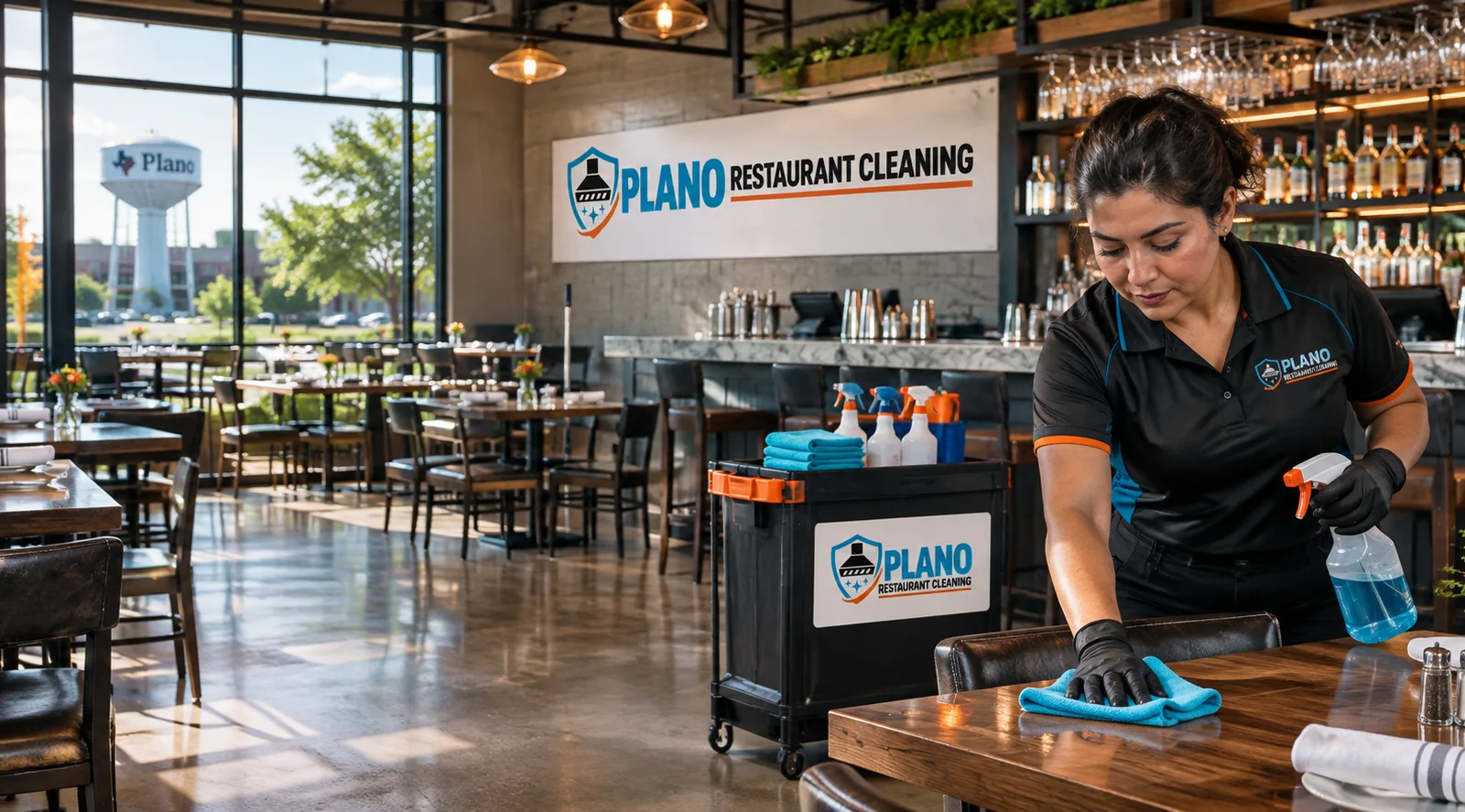
A professional cleaner preparing a polished Plano restaurant dining room before opening, with clean tables, floors, fixtures, and bar surfaces visible
Restaurant cleaning service · Plano, Texas

Restaurant Cleaning Services In Plano

Keep dining, bar, restroom, kitchen support, and floor areas ready for guests with a cleaning plan built around your operating hours.

✓Dining and bar areas
✓Restroom cleaning
✓Floors and high surfaces
✓Scheduling around operations
Cleaning built around service

Reliable Restaurant Cleaning Services Around Your Schedule

Restaurant Cleaning Services should make opening easier, protect the guest experience, and give managers a clear standard for every visit. Plano Restaurant Cleaning creates written scopes for front of house, back of house support areas, dining rooms, bars, restrooms, floors, and high surfaces. Work can be planned around opening, closing, deliveries, and prep so cleaners do not interfere with staff or guests.

Restaurants near Downtown Plano often occupy compact commercial spaces where entrances, dining areas, and service paths sit close together. Busy properties around Legacy West may need close attention to glass, floors, bar areas, and restrooms because frequent guest turnover makes missed details easy to spot. At The Shops at Legacy, evening traffic can make after-hours scheduling and dependable closeout checks especially useful. Seasonal pollen, windblown dust, and storm debris in North Texas also collect around entries, vents, ledges, and overhead fixtures.

Our team works as a restaurant company Plano homeowners rely on while applying commercial cleaning methods suited to food-service spaces. Each plan identifies the surfaces included, service frequency, access arrangements, product restrictions, and who reviews completed work. That structure gives restaurant managers a practical way to address recurring trouble spots instead of relying on a vague checklist.
Request a Callback
Guest-facing details

Front Of House Cleaning That Protects The Guest Experience

Request a Callback

Restaurant Dining Room Cleaning

Dining tables, chair backs, booths, partitions, host stands, baseboards, reachable ledges, and other agreed touchpoints are cleaned according to the written scope. Soil under furniture and along edges receives specific attention rather than a quick pass through open aisles.

Restaurant Bar Cleaning

Bar fronts, stools, foot rails, shelves, counters, and surrounding floors can be included. Cleaning methods are matched to materials such as sealed wood, stainless steel, tile, glass, and resilient flooring.

Restaurant Restroom Cleaning Plano

Restroom service can cover toilets, urinals, sinks, mirrors, dispensers, partitions, floors, and touchpoints. Supplies, odor concerns, scale, and recurring soil conditions can be recorded for manager review.

Entry And Waiting Areas

Doors, interior glass, mats, host areas, and entry floors receive focused care because tracked soil and fingerprints shape a guest's first impression. Exterior work is included only when it appears in the agreed scope.

Dining Area Cleaning

A planned rotation can address daily surfaces as well as details that need periodic work, including furniture legs, wall edges, decorative ledges, and corners that routine shift cleaning may miss.

Touchpoint Care

Door handles, rails, switches, and other frequently handled surfaces can be cleaned using suitable products and the required dwell time stated on the product label.

Controlled cleaning boundaries

Restaurant Back Of House Cleaning In Plano

Back of house work starts with a defined boundary. General janitorial cleaning may include dry storage floors, staff areas, corridors, nonproduction surfaces, waste staging areas, and accessible wall or door surfaces. Food-contact surfaces, active cooking equipment, exhaust systems, grease traps, and pest treatment require separate procedures or specialist vendors, so they should never be assumed to be part of a general cleaning visit.

Before service begins, managers should identify restricted areas, chemical storage rules, equipment that must remain untouched, and any surface requiring a manufacturer-approved product. Cleaning chemicals must remain labeled and separated from food and food-contact items. Staff and cleaners also need a clear process for wet-floor signs, broken glass, sharps, spills, and access around hot or energized equipment.

A good Restaurant Back Of House Cleaning Plano plan separates tasks by risk and soil type. Clean tools should not be carried from restrooms into dining or food-service areas. Color-coded cloths and mop equipment can support that separation. High-to-low cleaning, followed by floor work, also prevents dust and loose soil from falling onto an area that was already finished.

Request a Callback
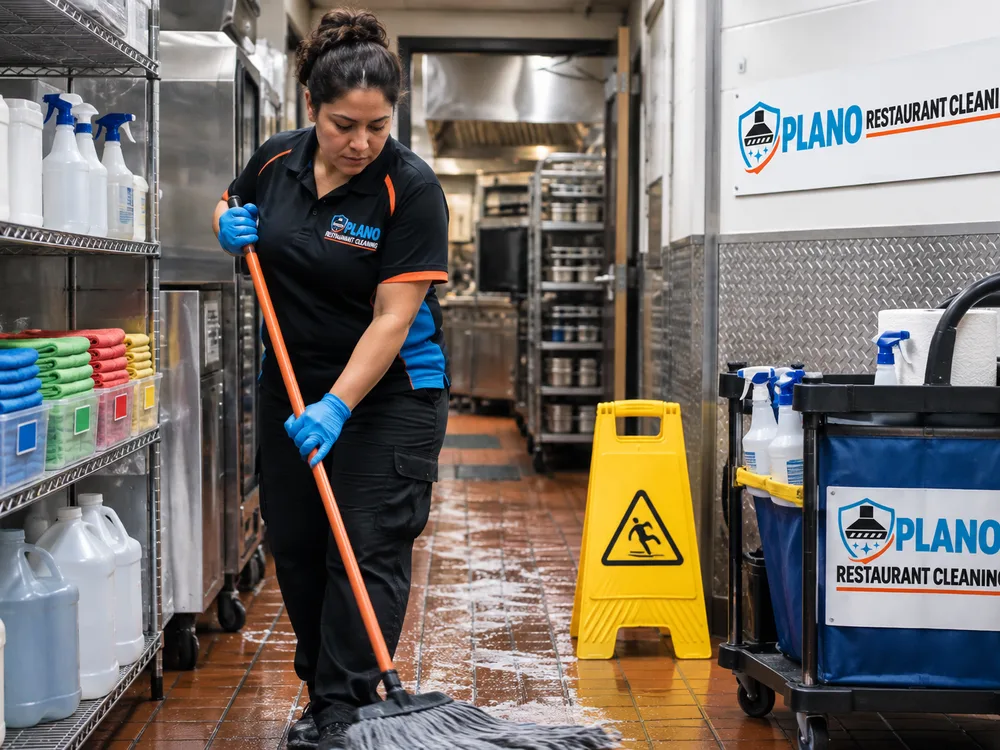
A trained commercial cleaner working in an orderly restaurant back-of-house corridor with labeled supplies, color-coded cloths, and a wet-floor sign
Defined tools, access rules, and cleaning boundaries support controlled back-of-house work.
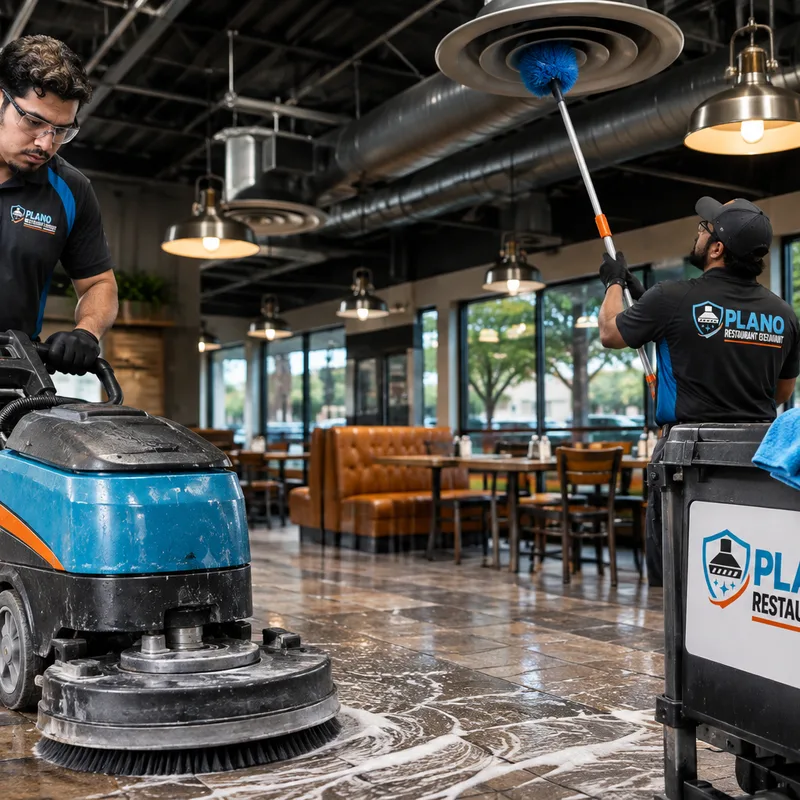
A close view of commercial high dusting around restaurant vents and light fixtures, paired with careful machine cleaning of a tiled dining-room floor
Overhead details and floor materials require different tools, products, and service intervals.
From overhead fixtures to floor edges

High Dusting And Restaurant Floor Cleaning

High dusting targets accessible overhead areas that collect lint, airborne grease film, and dust. The scope may include vents, pipes, tops of partitions, light housings, ceiling fans, decorative fixtures, signs, and ledges. Work should be completed with suitable extension tools or approved access equipment. Loose material is controlled before lower surfaces and floors receive their final cleaning.

Frequency depends on ceiling height, cooking activity, air movement, fixture design, and how quickly visible buildup returns. High Dusting is often scheduled separately from nightly work because it may require extra setup and time. Areas over exposed food, clean dishes, or active preparation zones must be cleared or protected before work starts.

Restaurant Floor Cleaning also varies by material. Quarry tile and grout may need degreasing and agitation, while luxury vinyl tile, sealed concrete, wood, and natural stone require different chemistry and moisture control. Vacuuming or dust mopping removes loose soil first. The floor is then cleaned using a method suited to its finish, with edges and areas under movable furniture included where access allows. Entry mats should be handled separately so trapped grit is not spread back across the floor.

Request a Callback
A repeatable service standard

How We Build And Maintain Your Cleaning Plan

  1. Step01

    Walk Through The Restaurant

    We review the dining room, bar, restrooms, back of house support spaces, floors, high surfaces, access points, and storage rules. Managers can identify guest-facing priorities and recurring problem areas.

  2. Step02

    Define Scope And Frequency

    The written plan separates tasks by visit, weekly rotation, or periodic service. It also records exclusions, approved products, floor materials, access instructions, and the preferred service window.

  3. Step03

    Prepare For The First Service

    The restaurant confirms entry procedures, alarm instructions, restricted equipment, waste locations, and where cleaning supplies may be used or stored. Sensitive items are removed or protected before work begins.

  4. Step04

    Clean In A Controlled Order

    Crews generally work from cleaner areas toward dirtier areas and from high surfaces toward floors. Restroom tools remain separated, warning signs are placed as needed, and completed spaces receive a final visual check.

  5. Step05

    Review And Adjust

    Managers can report changing traffic patterns, menu-related soil, special events, or maintenance concerns. The scope can then be adjusted so time is spent where the restaurant needs it most.

Request a Callback
Clear details before work begins

A Practical Scope For Plano Restaurant Operations

A useful proposal should say more than “clean the restaurant.” It should name the rooms, surfaces, methods, frequencies, and exclusions. It should also explain whether chairs will be moved, whether interior glass is included, how floor edges are treated, which high surfaces are reachable, and who supplies consumable restroom products. Those details make service easier to inspect and price.

Scheduling matters across Plano's different dining areas. A compact Downtown Plano restaurant may have limited storage and a narrow service window between closing and morning prep. A larger dining operation near the Dallas North Tollway may need work divided into zones so employees, vendors, and cleaners can move safely. Restaurants near major shopping and entertainment destinations may also need flexible planning around weekend traffic, private events, and holiday hours.

Plano Restaurant Cleaning can provide recurring cleaning or a focused reset based on the actual condition of the property. Recurring visits help control routine soil. A deeper initial service may be appropriate when floor edges, restroom buildup, overhead dust, or neglected details require more time than a normal maintenance visit permits. The written scope should distinguish the initial work from the ongoing standard.

Request a Callback

Get a written restaurant cleaning scope that identifies priorities, service frequency, access needs, and the areas included before work begins.

Call for a Free Quote
Answers before service begins

Questions Plano Restaurant Managers Ask

How much do Restaurant Cleaning Services cost in Plano?

Restaurant cleaning is priced after the size, frequency, condition, and scope are reviewed. A small dining room with light nightly duties requires less labor than a large restaurant needing bar, restroom, back of house, floor, and periodic high-dusting work. Access time, floor material, furniture movement, consumable supplies, and the first deep clean also affect the proposal. An on-site walkthrough at the Plano property is the soundest way to establish a written price.

Can cleaning be scheduled after the restaurant closes?

Yes, service can be planned around closing, opening, prep, deliveries, and alarm procedures. The restaurant must provide a realistic access window and identify any areas still occupied by kitchen or closing staff. Properties near late-night dining and entertainment areas may need a later start or a zone-by-zone plan.

What is included in Restaurant Front Of House Cleaning in Plano?

Front Of House Cleaning can include dining tables, booths, chairs, host areas, reachable ledges, interior entry glass, bar exteriors, floors, and agreed touchpoints. Restrooms and high dusting may be included in the same scope or scheduled separately. The proposal should state whether furniture moving, supply restocking, and periodic detail work are included.

Do you clean commercial kitchen equipment and exhaust hoods?

General back of house cleaning does not automatically include cooking equipment, hood interiors, ducts, fans, grease traps, or fire-suppression components. Those systems can require trained specialty vendors and separate service procedures. Accessible nonproduction surfaces, corridors, dry storage areas, and floors may be included when they are identified during the walkthrough.

How often should restaurant high dusting be scheduled?

High-dusting frequency should be based on visible buildup, cooking activity, airflow, ceiling design, and fixture height. North Texas pollen and airborne dust can add soil near entries and ventilation paths, while grease-laden air may create heavier film closer to cooking areas. A walkthrough can identify which vents, pipes, ledges, and fixtures belong on a periodic rotation.

Can you clean different restaurant floor materials?

Yes, restaurant floor care can be matched to materials such as quarry tile, resilient flooring, sealed concrete, wood, and natural stone. The correct product, dilution, agitation, and moisture level depend on the floor and its finish. A test in an inconspicuous spot may be appropriate when the coating or prior treatment is uncertain.

How quickly can recurring service begin?

The start date depends on walkthrough availability, scope approval, access arrangements, and the condition of the restaurant. A property that needs an initial deep clean may require a longer first visit before recurring maintenance begins. Plano managers should also disclose upcoming events, holiday hours, or vendor access that could affect scheduling.

How do you prevent cross-contamination between restaurant areas?

Area-specific tools, color coding, labeled chemicals, and a planned cleaning order help keep restroom equipment separate from dining and food-service spaces. Cloths and mop heads should be changed or assigned by area, and products must be used according to label directions. Managers should identify food-contact surfaces and restricted preparation zones before service.

Define your restaurant scope

Set A Clear Standard For Every Cleaning Visit

Tell Plano Restaurant Cleaning about your dining room, bar, restrooms, back of house areas, floors, overhead surfaces, and operating schedule. We will help define a practical scope for the work.