Cooking Line Perimeters
Grease accumulates beside and behind fryers, ranges, grills, and preparation equipment. Accessible surfaces are degreased without disturbing protected controls, utility connections, or fire-suppression components.
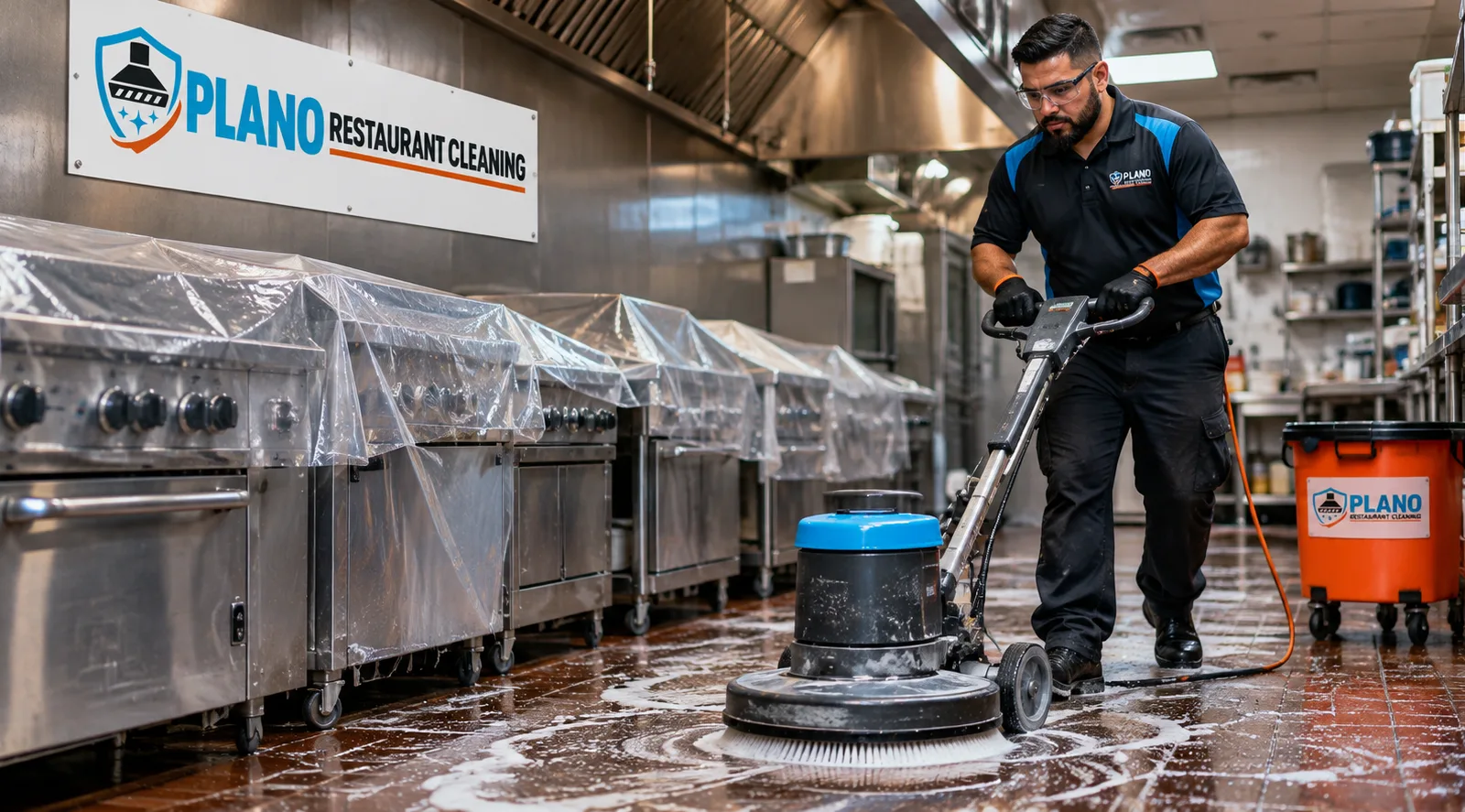
Remove cooked-on grease, embedded floor soil, and buildup in hard-to-reach areas with a cleaning scope planned around your kitchen, equipment, and operating schedule.
Restaurant Kitchen Deep Cleaning Frisco work should address the residue that routine closing duties leave behind. Aerosolized cooking oil settles on equipment sides, walls, pipes, casters, and other surfaces. Food particles and tracked-in soil collect along grout lines, floor edges, and beneath movable equipment. Over time, these layers become harder to remove and may make floors slick or attract pests.
Plano Restaurant Cleaning plans each job around the kitchen's layout, surface materials, soil level, and access. From our base on J Ave, our restaurant specialists serving Plano work with nearby Frisco restaurants that need a defined deep-cleaning scope. The plan can prioritize cooking lines, preparation zones, warewashing areas, walk-in floors, or the entire back of house. Cleaning may be scheduled outside service hours so the crew can reach work areas without interfering with food production.
A proper scope separates cleanable surfaces from equipment that requires special handling. Gas connections, electrical components, fire-suppression equipment, hot appliances, and sensitive controls must be identified before work begins. Heavy equipment is moved only when doing so is safe and authorized. This preparation protects the kitchen and gives the crew clear access to the surfaces included in the job.
The exact checklist depends on the kitchen, but a full deep clean can include degreasing walls and washable vertical surfaces, wiping equipment exteriors, cleaning shelving, scrubbing baseboards, detailing floor edges, and removing buildup beneath accessible movable equipment. Splash zones near fryers and ranges often need a stronger degreasing process than general preparation areas.
Crews should match chemistry to the residue and surface. Alkaline degreasers help break down fats and oils, while dwell time gives the product time to loosen buildup before agitation. Food-contact surfaces require suitable products, thorough rinsing when directed by the label, and a separate sanitizing step when included in the scope. Degreasing and sanitizing are different tasks: cleaning removes soil, while sanitizing follows on an already clean surface.
Vertical surfaces are normally addressed before floors so loosened residue is not deposited on a finished floor. Stainless steel is cleaned with attention to the grain, and test spots can help identify surfaces that may react to stronger chemistry. Hood interiors, ductwork, rooftop fans, and fire-suppression systems are specialized systems and should not be treated as ordinary kitchen surfaces unless they are expressly included and handled by a qualified provider.
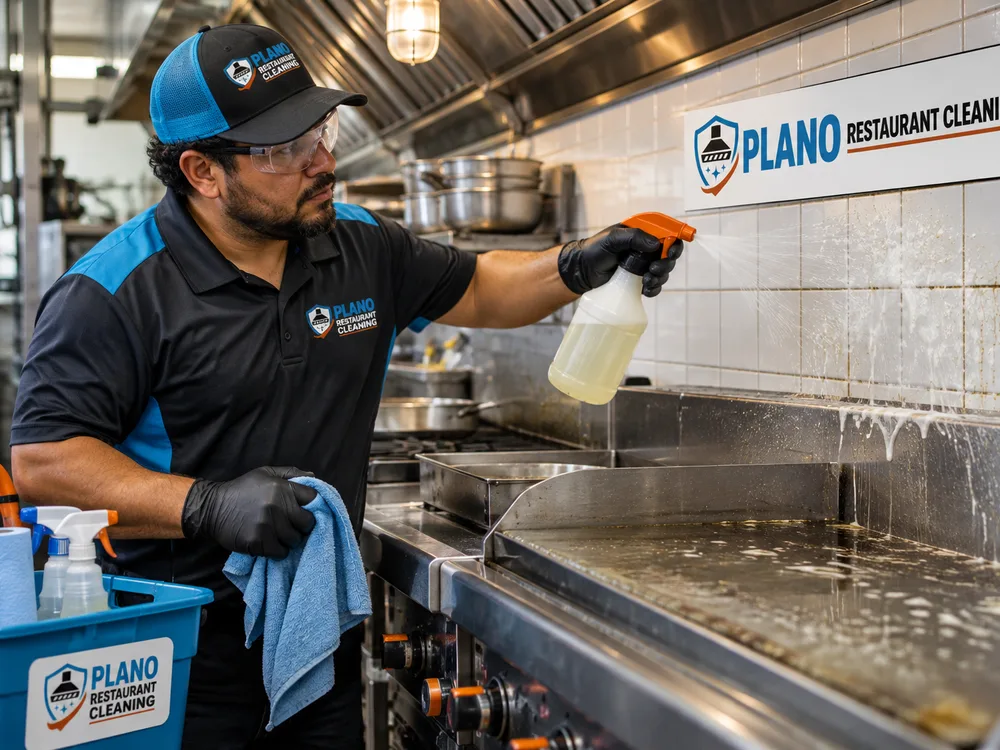
Grease accumulates beside and behind fryers, ranges, grills, and preparation equipment. Accessible surfaces are degreased without disturbing protected controls, utility connections, or fire-suppression components.
Mechanical agitation helps release embedded soil from textured tile, grout lines, corners, and coving. Recovery removes dirty solution instead of spreading it into adjacent areas.
Washable shelves, rack legs, wall surfaces, and floors can be detailed after food, utensils, and loose supplies are removed or securely protected.
These areas may contain food residue, grease, detergent film, and standing moisture. Cleaning focuses on accessible floors, edges, splash areas, and equipment exteriors.
Walk-in cooler and freezer floors require a method suited to temperature, drainage, surface condition, and stored inventory. Product must be protected or relocated before cleaning begins.
Interior waste zones and back-of-house receiving paths can collect leaked liquids and tracked soil. These spaces need controlled cleaning that does not spread residue into food areas.
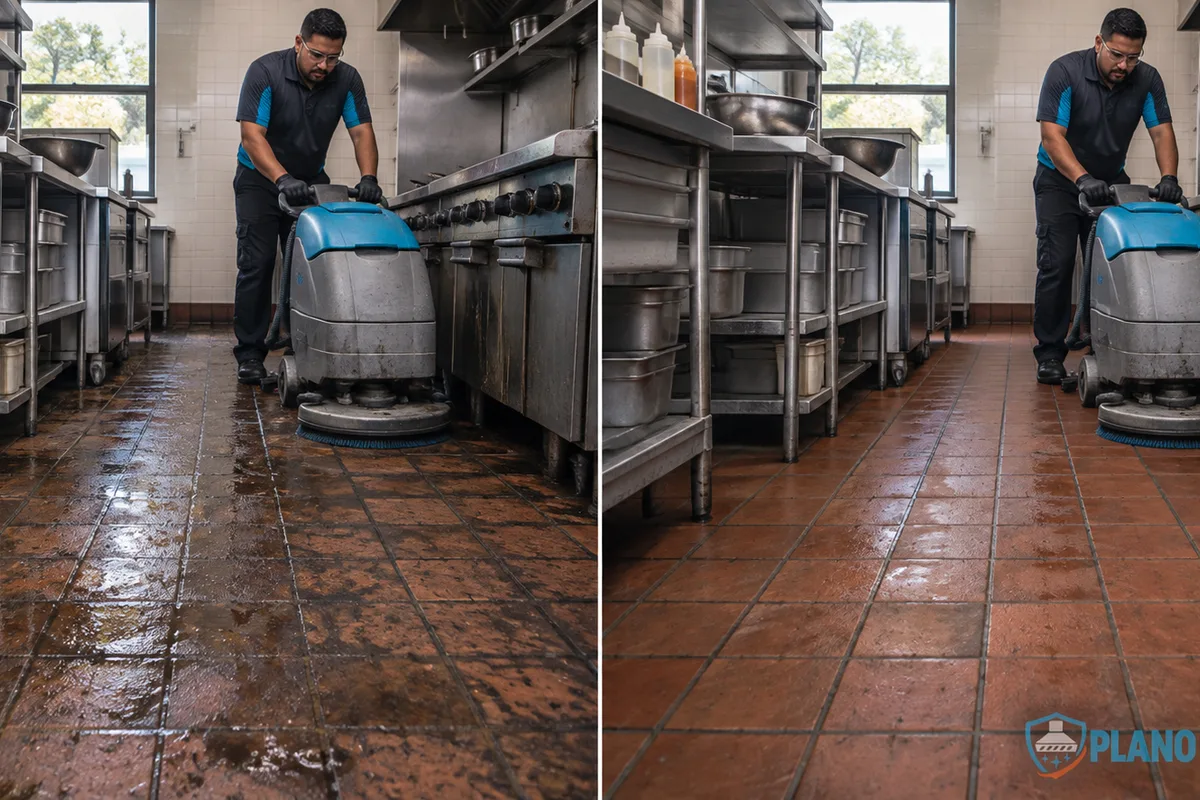
Restaurant Floor Cleaning Frisco requires more than running a mop through the kitchen. Grease can settle into grout, textured quarry tile, concrete pores, and worn areas of resilient flooring. Reusing dirty solution may leave a film that becomes slick when wet. A deep-cleaning process applies the correct detergent, allows practical dwell time, agitates the surface, and recovers the contaminated solution.
Floor construction determines the method. Quarry tile and sound grout can often tolerate firm mechanical agitation, while damaged grout, loose tile, failing transitions, or cracked coatings require a more cautious approach. Excess water should not be driven under equipment, through open joints, or toward electrical components. Floor drains are used only when their condition and the kitchen's procedures permit it. Wastewater must be handled through approved sanitary disposal practices, never sent to a storm drain.
Frisco restaurants experience tracked dust and grit during North Texas dry periods, while rain can bring additional soil through receiving doors and employee entrances. These particles combine with kitchen grease and increase abrasion under foot traffic. Entry mat care, frequent solution changes, and attention to traffic lanes help prevent that mixture from being carried back across a freshly cleaned floor.
The walkthrough identifies surface materials, grease concentration, floor condition, equipment access, drains, utilities, and areas that must remain untouched. The written scope states what will be cleaned and any preparation the restaurant must complete.
Food, utensils, packaging, and small equipment are removed or protected. The kitchen confirms shutdown and cool-down requirements, access times, alarm procedures, and responsibility for moving approved equipment.
Loose food particles and dry soil are collected before wet cleaning. This reduces the amount of debris entering floor drains and prevents it from turning into slurry during scrubbing.
Crews work in a controlled order, generally starting with higher washable surfaces and equipment exteriors. Products are given appropriate dwell time, then residue is agitated and removed according to label directions.
The floor is treated in manageable zones. Edges and grout receive focused agitation, while wet vacuums or suitable recovery equipment collect the dirty solution.
Included areas are checked for visible residue, pooled water, and missed edges. The kitchen should remain out of service until surfaces are dry and any required restaurant reopening procedures are complete.
A breakfast kitchen may need work after an early close, while a dinner operation may prefer overnight access. Restaurants around Frisco Square may have shared access, parking, or waste-handling rules that affect crew arrival and equipment movement. Businesses near The Star can face event-driven traffic and tighter loading windows. Restaurants serving Stonebriar Centre and the surrounding retail area may need to coordinate with property management before after-hours vendor access.
These operating details belong in the plan before cleaning starts. Plano Restaurant Cleaning asks about service hours, security access, equipment shutdowns, water availability, floor drains, and the time the kitchen must be ready for staff. The restaurant remains responsible for food handling, utility shutdowns, appliance servicing, and any health-control procedures specific to its operation.
A written proposal should define the included rooms and surfaces, exclusions, access assumptions, and the condition expected before the crew arrives. It should also distinguish deep cleaning from repairs. Cleaning can remove grease and soil, but it cannot replace missing grout, repair cracked tile, correct poor drainage, or restore a coating that has worn away.
Get a written kitchen-cleaning scope based on your operating hours, equipment access, floor materials, and the buildup that needs attention.
Call for a Free QuotePricing depends on kitchen size, grease level, floor condition, equipment access, and the surfaces included. A lightly soiled preparation kitchen and a high-volume fryer line require different labor, chemistry, and recovery time. After-hours access, equipment movement, and property rules around Frisco Square, The Star, or retail centers can also affect the quote. A walkthrough is the best way to confirm a written price.
The work window depends on the scope, buildup, access, and drying requirements. A limited floor and perimeter cleaning may fit within one closed period, while a heavily soiled kitchen with multiple cooking and storage zones can require a longer shutdown or phased work. Scheduling should include time for equipment to cool, surfaces to dry, and restaurant staff to complete reopening checks.
Overnight service may be available when access, staffing, security, and the required work window can be coordinated. Frisco restaurants in managed retail or mixed-use properties may also need approval for after-hours entry, loading, wastewater handling, or alarm access. These details should be confirmed before the service date.
Yes, exposed food, utensils, packaging, and movable countertop items should generally be removed or securely protected before cleaning begins. The restaurant should also identify anything that must not get wet and arrange authorized shutdown of appliances or utilities. The final preparation checklist depends on the agreed scope.
Equipment is moved only when it is safe, authorized, and included in the scope. Appliances connected to gas, electricity, water, drains, or fire-suppression systems may require restaurant staff or a qualified trade to disconnect and reposition them. A pre-service inspection determines which areas can be reached without risking equipment or utility connections.
Deep cleaning can remove grease film and embedded soil that contribute to slipperiness, but it cannot correct damaged tile, worn coatings, poor drainage, or unsuitable flooring. The floor should be inspected after cleaning and allowed to dry fully. Restaurants should continue routine spill response, use appropriate mats, and address physical defects separately.
Sanitizing is included only when it is specified in the agreed scope and can be performed with products suitable for the surface and application. Cleaning must remove visible soil before sanitizing. Restaurant management remains responsible for its food-safety plan, product storage, concentration checks, contact times, and reopening procedures.
Remove loose items, sweep up large debris, secure food and utensils, and identify damaged grout, loose tile, open joints, or sensitive equipment before the crew arrives. Staff should also confirm drain access and any property rules for wastewater. Clear traffic paths help the crew clean edges and equipment perimeters without moving unapproved items.
Tell Plano Restaurant Cleaning about the kitchen layout, problem areas, flooring, and available work window. We will help define a practical scope before cleaning begins.